
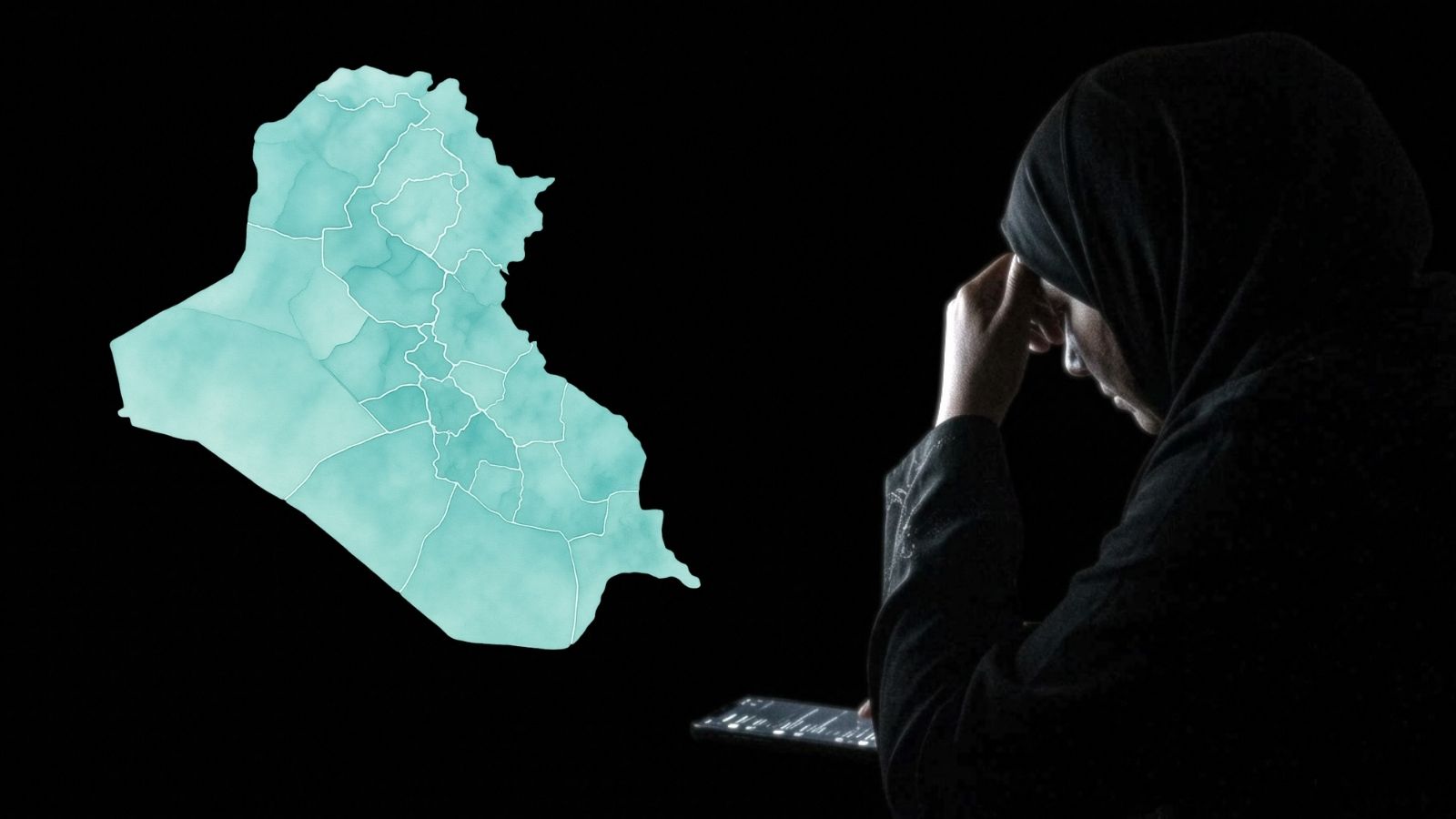
Half of the women in Iraq who are subjected to violence also face digital violence, according to figures published on Saturday by an Iraqi investigative journalism network.
The Network of Iraqi Reporters for Investigative Journalism, known as NIRIJ, cited a 2026 statistic from the Strategic Centre for Human Rights in Iraq. The same figures record digital violence as occurring on Facebook in 18.3 per cent of cases, Instagram in 17 per cent, Messenger in 8.5 per cent, WhatsApp in 7 per cent, and Telegram and X in 5.6 per cent each. The report does not state what those proportions are a share of.
Ruqaya Salman, a social researcher, told the network that attackers continued because they were “betting on the victim’s fear of social stigma, or of being blamed, which drives many women into silence and into not reporting”.
Ali Karim, a specialist in technology and digital violence, said the women most exposed were journalists, activists, businesswomen and students in higher education. An ordinary post, he said, could bring a campaign of abusive comments, threats or attempts at extortion.
He said the abuse included online bullying, hate speech, defamation, impersonation, electronic extortion and the publication of images or personal information without consent, as well as organised campaigns directed at particular individuals or groups.
“Where is the silencer?”
Suhaila Abdul Hussein, a civil activist in Baghdad who joined the Iraqi Women’s League in 2004, told NIRIJ she had spent about twenty years in community work before her public activity made her a target.
She said the abuse followed her appearances at the Tishreen protests of 2019 and an interview on a satellite channel about women’s rights and the Personal Status Law. She received direct threats, and some wrote phrases inciting her killing, among them: “Where is the silencer?”
NIRIJ explains the reference. Participants in those protests say unknown men used pistols fitted with silencers to assassinate colleagues who were calling for political reform and public services.
Abdul Hussein said she had not stopped. “Campaigns of violence did not frighten me or stop me, and I still believe that Iraqi women deserve protection.”
A business closed, a city left
The report follows two women whose working lives were ended by the abuse.
A woman identified by the pseudonym Ahlam built a cosmetics business on Facebook from a small amount of capital. Within two years it was her family’s only income.
In early 2025 she showed her products in a live broadcast in which her face did not appear. Abusive comments followed. She said they came from relatives in Karbala who objected to people hearing her voice.
What followed was an organised campaign of mocking comments, insulting messages and posts questioning her reputation, she said, some under real names and some from fake accounts. It ran for about three months. She closed the page and now sells through a WhatsApp group, where sales are very small.
“The hardest thing I faced was not the loss of sales,” she said, “but that my day turned from running my business into deleting abusive comments and answering accusations.”
A 20-year-old woman from Karbala told the network she had set up a Facebook page at the age of sixteen, in 2025, publishing material supporting women’s rights and encouraging girls to study and take part in public life. Her mother, a pharmacist, had encouraged her.
As the page grew she faced abusive comments and defamation campaigns, from men and from women. Her father’s relatives told her what she was doing did not accord with social custom. She did not feel safe in her city, closed the page and left.
“I had to leave my city, give up my studies, and step away from the humanitarian work I loved,” she said, “only because I was asking for the rights of a group in society that suffers injustice.”
Shahla Sabbar, a social researcher, said the figures did not only show the scale of the abuse. They revealed “a phenomenon expanding in silence, while its real effects remain invisible in official statistics”.
No dedicated law
Iraq has no specific legislation on digital violence.
Azhar al-Dulaimi, a rights advocate, told NIRIJ that protection currently rests on penal code provisions covering threat, extortion and defamation — a very old law, she said, that does not correspond to the development of electronic crime.
Two bills that would change that have not been passed. The Information Crimes Law remains under legislation and amendment in the Council of Representatives. The Family Protection Bill was referred to parliament years ago and has still not become law, which al-Dulaimi said left a gap in dealing with some forms of violence against women.
Mohammed Juma, a lawyer, said complaints went to an investigating judge at the nearest court, who referred them to the relevant police station. Electronic extortion falls to the National Security Service. Insult, defamation and damage to reputation go to the investigating courts.
In online defamation cases, he said, the burden of establishing who the attacker is often falls on the victim, who has to assemble whatever information she can — his accounts, his place of work, any available detail.
Few women complain, Juma said, because proceedings are slow, because the process requires dealing with more than one agency, and because of social convention: many fear going to police stations and courts because of social pressure or limited freedom of movement.
He called for an official online platform to receive complaints of digital violence.