
Most university students surveyed in a pilot study in Myanmar had experienced some form of online harm in the previous year, and a workshop designed to help them recognise and respond to it was associated with less shame and distress and a greater willingness to seek help.
The pilot was run by Stop Online Harm, a survivor-led group, with researchers from University College London, and the preliminary results were presented at a webinar last week. It examined whether the group’s Hummingbird Workshop changes how students recognise and respond to online harm and specifically technology-facilitated gender-based violence.
“TFGBV is bad — but there is something schools can do about it,” said Saijai Liangpunsakul, the group’s founder.
The group describes the findings as promising descriptive results drawn from comparing students at the start and end of the study, rather than the output of a full randomised controlled trial with a counterfactual, and says the next step is to verify them with one.
“We don’t yet have a lot of RCT evidence on what works to combat online harm, and in particular, technology-facilitated gender-based violence,” said Alexandra Hartman, a professor at UCL. “And that’s why we think that this pilot — and then future work we hope to do — is really important.”
What the students reported
At baseline, 62 per cent of participants said they had experienced online harm in the previous year. Stop Online Harm said 27 per cent of all participants reported technology-facilitated gender-based violence specifically, including image-based abuse, sextortion, threats of violence and death threats. Much of it came from unknown or anonymous accounts.
Being online is central to students’ lives, said Gloria Gennaro, an assistant professor at UCL. “They use it for studying, for work, for social connections, for activism, for all their possible passions in life.”
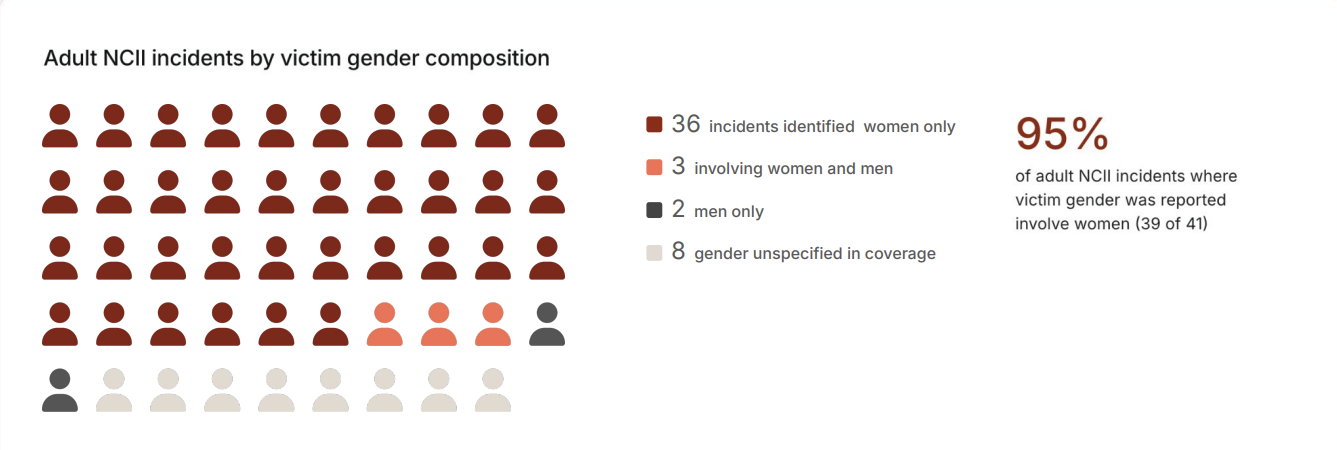
Gender shaped the experience. Men and women reported similar overall levels of online harm, but women reported higher rates of technology-facilitated gender-based violence, higher levels of distress and shame when it happened, and were more likely to attribute what happened to them to their gender or sexual identity.
The workshop
The Hummingbird Workshop has two parts. The first is a six-episode animated series, each episode around ten minutes, following a character intended to be relatable, and designed to counter myths, reduce shame and victim-blaming, and set out how to get help. The group said the series was built to be engaging and locally relevant down to the characters’ names, clothes and language.
The second is a small-group session led by a facilitator trained in trauma-informed care, in which students discuss the videos, relate them to their own lives and ask questions.
How the study was run
Students were randomly assigned either to early access to the videos or to early access to the videos and the session, and were surveyed at the start, middle and end. All had access to both parts by the end, so that no participant missed the intervention.
The study passed a university ethics review. Stop Online Harm said it collected only necessary data, asked sensitive questions with care and kept its own support service, the Online Ambulance, available to every student throughout.
“It has to be part of the whole research process, starting from the beginning to the end,” said Hetty Phu, the group’s programme lead, of the approach to ethics.
Comparing the start and end of the study, participation was correlated with more help-seeking and with falls in loneliness, victim-blaming attitudes, shame and distress, the group said.
“The Hummingbird videos and workshop are correlated with several outcomes, including improving well-being and declining levels of shame,” said Sara Merner, a senior policy associate at J-PAL Europe.
Stop Online Harm said it plans to raise funds for a full randomised controlled trial, extend the work to neighbouring countries and set up a student ambassador programme.