Category: Courts

  • Fifteen years in the first sentence under America’s deepfake law

    Fifteen years in the first sentence under America’s deepfake law

    A man who used artificial intelligence to create sexual images of women he knew and sent them to their colleagues and families has been sentenced to 15 years in prison, in the first case brought under the American law against non-consensual intimate imagery.

    James Strahler II, 37, of Columbus, Ohio, was sentenced to 180 months by Chief US District Judge Sarah D. Morrison on Tuesday. He pleaded guilty in April to cyberstalking, producing obscene visual representations of child sexual abuse, and publication of digital forgeries.

    The last of those charges falls under the Take It Down Act, the law enacted in 2025 that prohibits the non-consensual online publication of intimate images and AI forgeries, and requires platforms to remove such material within 48 hours of a valid report. The Department of Justice said Strahler was the first person in the country convicted under it.

    What he did

    Between December 2024 and June 2025, Strahler sent harassing messages to at least six adult women, including nude images of them that were both real and AI-generated, the department said.

    He used AI to create pornographic videos showing at least one of the women having sex with her father, and sent them to her colleagues.

    He contacted the women’s mothers and demanded nude photographs of them, threatening to circulate the images he had made of their daughters if they refused. He telephoned the women and left voicemail messages that were sexually explicit or threatened rape, and referred to their home addresses.

    Strahler had installed more than 24 AI platforms and more than 100 web-based AI models on his telephone.

    He also created obscene AI material depicting children, using the faces of boys from his own community, and posted more than 700 images of real and animated people to a website dedicated to child sexual abuse material. A further 2,400 images and videos on his telephone were flagged as depicting nudity, morphed child sexual abuse material or violence.

    The case

    The conduct was first reported to Hilliard Police and the Delaware County Sheriff’s Office before being referred to the FBI. Strahler was arrested on federal charges in June 2025.

    “I’m proud of my Office’s prosecution of this case — the first in the Nation under the Take It Down Act,” said Dominick S. Gerace II, the US Attorney for the Southern District of Ohio. “Thanks to this new law, we can now show offenders like Strahler that they will not get away with producing and posting disturbing AI-generated content.”

    Jason Cromartie, the FBI’s special agent in charge in Cincinnati, said the Act “was enacted to protect innocent victims from AI-generated deepfakes or intimate images shared online without permission”.

    The prosecution was brought by assistant US attorney Emily Czerniejewski. The sentence was announced alongside officials from the Maryland AI and Synthetic Media Threats Task Force.

  • Man found guilty of making sexualised deepfakes of students and staff

    Man found guilty of making sexualised deepfakes of students and staff

    A man who made and distributed sexualised deepfake images of current and former students and staff at Brisbane high schools has been found guilty on all 17 counts, in one of the first completed prosecutions of its kind in Australia.

    A jury at the Brisbane District Court convicted Antonio Rotondo, 56, of 11 counts of stalking, five counts of distributing intimate images and one count of distributing child exploitation material, the ABC reported. He had pleaded not guilty to all of them. The jury deliberated for several hours.

    The offending took place in September 2023, while Rotondo was living in the Philippines. Using a website, he digitally altered publicly available photographs of several women and girls to remove their clothing or replace it with lingerie.

    He then emailed the images to a range of recipients. One image, of a 13-year-old girl, was sent to her school. He also emailed altered photographs of women who had taken part in a Brisbane Fashion Week event to another woman involved in the same event. More than a dozen of the images were uploaded to a website.

    He was arrested a month later, after travelling to the Gold Coast.

    “Funny”, and a “hobby”

    In a police interview played to the jury, Rotondo admitted sending the emails and uploading the images. Asked why, he said he did it because it was “funny”, and described it as a “hobby”.

    He also told officers that “you cannot stop deepfakes”, and that because the software to make them exists they must be “acceptable to a percentage of community”.

    The defence the jury rejected

    Rotondo represented himself. To convict him on some of the charges, the jury had to be satisfied that his conduct caused distress to the complainants.

    In his closing address he argued there was reasonable doubt that some had suffered serious emotional harm, because they had never seen the images.

    “They didn’t see that image so it’s not possible for them to have a psychological problem with that image,” he said.

    He also argued there was insufficient evidence that he controlled the website.

    The jury convicted him on every count.

    What the complainants said

    Several complainants described the effect of the images in police interviews played to the court.

    One woman said she was “very distressed”. Another said she felt “extremely violated” and that her “trust is gone” in general society.

    “I’ve since significantly self-censored how I show up, how I present publicly,” she said.

    What happens next

    Rotondo was remanded in custody. His sentencing hearing is listed for Wednesday.

  • Minnesota’s nudification ban goes too far: Justice Department

    Minnesota’s nudification ban goes too far: Justice Department

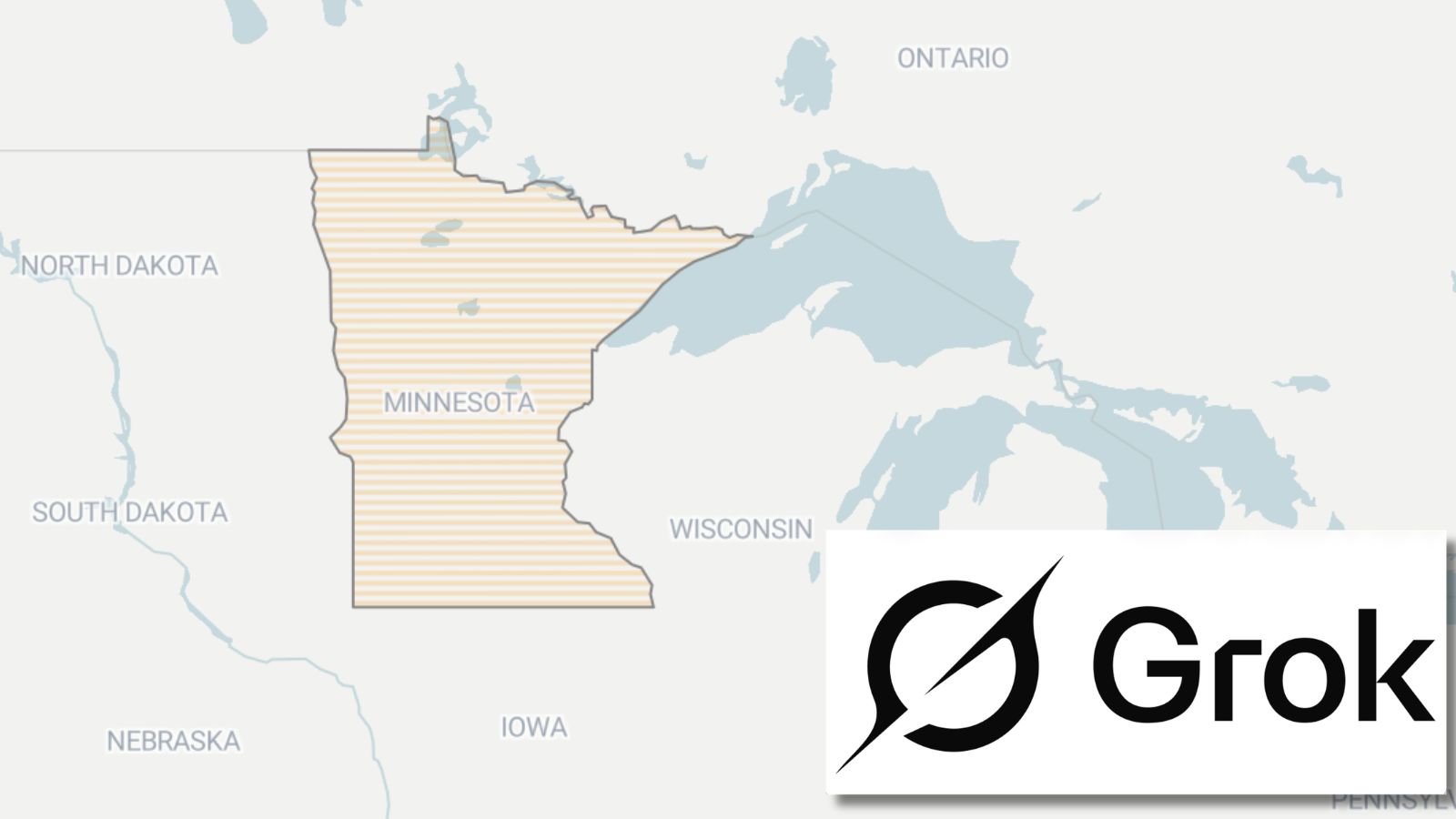
    The United States Justice Department has told a federal court that Minnesota’s ban on nudification technology reaches further than federal law and risks “paralyzing the AI industry and hampering United States leadership in AI”.

    The 14-page statement of interest, filed on 18 August and read by Unbowed, was submitted under a provision allowing the attorney general to direct any officer of the department to attend to the interests of the United States in a pending case. It is signed by Associate Attorney General Stanley E. Woodward Jr, Deputy Associate Attorney General John K. Adams, and two counsel to the associate attorney general, Michael Weisbuch and Henrique Carneiro.

    It intervenes in a challenge brought by Elon Musk’s xAI, which asked Judge Donovan W. Frank in St Paul the following day to suspend the law while its case proceeds. Frank took the motion under advisement after a two-hour hearing and has not ruled. Attorney General Keith Ellison attended in person, according to the court’s minute entry.

    The department states its own interest

    The filing opens by placing the department between the two sides. “Like the Attorney General of Minnesota, the United States has a compelling interest in combating harmful computer-generated sexual imagery and obscenity,” it says. “And like xAI, the United States has an interest in promoting the safe and productive use of Artificial Intelligence.”

    It goes on to argue that federal law is “carefully calibrated” where Minnesota’s is not, and that the state statute “sweeps up constitutional and productive conduct not prohibited under federal law”.

    A footnote answers an objection before it is made. The statute under which the department filed “contains no time limitation and does not require the Court’s leave”, it says, citing two district court decisions. The same footnote adds that federal law does not confine the attorney general to filing statements of interest, that he “may intervene in any case to vindicate the supremacy of federal law”, and that the United States “reserves all rights”.

    MPR News reported that Assistant Attorney General Janine Kimble asked the court to strike the memo, arguing it was filed after the deadline for amicus briefs and that the federal government has no clear stake in the case. The court docket records the department’s submission as a motion to appear as amicus curiae; the document itself is styled a statement of interest and asserts that no permission is required. No ruling on it appears on the docket.

    The court had already turned away one set of would-be supporters of xAI. On 12 August, Frank refused permission to the Foundation for Individual Rights and Expression, the First Amendment Lawyers Association and the Woodhull Freedom Foundation, writing that “the expedited timeline of this case does not allow for additional briefs”. He had earlier admitted a brief from the Liberty Justice Center supporting xAI, and invited briefs supporting the attorney general.

    What the law does

    HF 1606 took effect on 1 August. It exposes companies to penalties of as much as $500,000, the department’s filing records, “for each unlawful access, download, or use” of their technology to nudify an image or video.

    It is a strict liability rule. Liability turns on whether a user altered an image in a proscribed way, not on whether the company knew or intended it.

    Minnesota’s own account of the law’s purpose, quoted in the federal filing from the state’s opposition brief, is that it exists to prevent child sexual abuse material and “harmful weaponizations of nudity”. The bill passed the state Senate unanimously and the House with a single dissenting vote, MPR News reported.

    The argument about a definition

    The department’s most specific criticism concerns a single defined term, and it is sharper than it first appears.

    Minnesota took its definition of “intimate part” from a criminal sexual conduct statute written about non-consensual physical contact rather than about images. That definition covers the inner thigh and the breast, male or female, alongside the genital area, groin and buttocks. Federal law, under the TAKE IT DOWN Act, reaches “the uncovered genitals, pubic area, anus, or post-pubescent female nipple”.

    The department then makes the point that gives the argument its force. Minnesota has a separate deepfake statute of its own, and that one defines intimate parts narrowly, in terms close to the federal wording. The state had a tighter definition available in its own statute book and did not use it.

    Hence the example that has been widely reported: an artificially generated image of a shirtless man in a swimming pool would fall outside federal law, the department writes, and inside Minnesota’s.

    Consent, knowledge and public concern

    Three further gaps are identified. Federal offences require that an act be done knowingly, or else give platforms a chance to remove an image after notification before civil liability attaches. HF 1606 does neither.

    Federal law applies where an adult has not consented. Minnesota’s has no equivalent provision, so that on the department’s reading it reaches a platform even where a user made an image of themselves.

    Federal law also exempts matters of public concern, and material used for medical, scientific or educational purposes. Minnesota offers what the filing calls “a nebulous savings clause” for technological or artistic skill and judgment.

    The department describes the federal scheme it prefers at some length: the PROTECT Act of 2003, and the TAKE IT DOWN Act signed by President Trump in May 2025, which criminalises publishing intimate images including digital forgeries and requires platforms to remove flagged material within 48 hours, enforced by the Federal Trade Commission. The filing notes that xAI is itself a covered platform under that Act.

    The policy argument

    The last section of the filing is about artificial intelligence rather than sexual imagery. It cites executive orders stating that it is United States policy to sustain “global AI dominance” through “a minimally burdensome national policy framework” — one national standard rather than, in the orders’ words, “50 discordant state ones”.

    It cites a memorandum by the attorney general of 9 January 2026 establishing an Artificial Intelligence Litigation Task Force, which it says recognises that state AI laws can interfere with American AI leadership.

    The filing does concede a limit. The United States has determined not to interfere with “states’ rights to pass prudent laws that are not unduly restrictive to innovation”, it says, quoting the administration’s AI action plan of July 2025.

    Its closing line is that as the country remains in the earliest days of a technological revolution and “in a race with adversaries for supremacy within it”, states “must be careful not to impose excessive measures that hinder American national and economic security”.

    In court

    xAI’s attorney Robert Dunn told the hearing the statute is too broad and has no exception for consent, artistic expression or parody. “There can be no question that the state’s purpose is to restrict speech,” he said, according to MPR News. Courthouse News, cited by The Next Web, reported him saying the state “would punish xAI for allowing a user to nudify themselves”. He said the company already forbids sexualised images of real people without consent and has banned thousands of users.

    Kimble argued that terms of service are not working, noting that xAI is still reporting tens of thousands of users who create such images. “The repercussions only happen after the fact,” she said, according to The Next Web: someone has to see an image, report it, locate it, and the user has to be within reach of a court. Distribution is already unlawful; the state’s case is that creation has to be reached as well. She described the law to the court as a way of “stopping the issue at its source”, MPR News reported, and pointed to lawsuits brought by families who say the company’s platform was used to depict their children in child sexual abuse material.

    Where it stands

    Frank refused an emergency restraining order on 31 July, writing that xAI had filed “nearly three months after the law was signed, and only three days before the law is set to take effect”, and that “such a delay in bringing the action and the motion suggests that harm is not immediate”. He set an expedited schedule instead and heard the injunction on 19 August.

    The law remains in force. After the hearing, Ellison’s office filed a motion to dismiss, arguing xAI has no standing to assert the First Amendment on behalf of its users. That is listed for 5 November.

    An 84-page transcript of the hearing has been filed but is restricted from public release until 17 November.

    Outside the courthouse

    Senator Erin Maye Quade, a Democratic-Farmer-Labor member who wrote the law, said companies should not be permitted to offer such tools at all. “They are giving people the tool to do it,” she said, according to MPR News. “This is technology that does not need to exist. Our law is narrow. It is specific to the conduct we want to regulate. It implicates nothing else.” She said that if Frank rules against the state she will bring a new ban to the legislature next session.

    Jessica Guistolise, who told Minnesota lawmakers she was the subject of AI-generated pornographic videos made without her consent and was left afraid to leave her house, joined them outside court. “I’m ready to continue to support this and offer my story and my experience all the way up to the Supreme Court if that needs to happen,” she said.


  • Korean police shelved a deepfake case. The survivors filed their own.

    Korean police shelved a deepfake case. The survivors filed their own.

    A South Korean school student has been referred to prosecutors over allegations he produced sexual deepfakes of about 20 female classmates, a year after police received an allegation about the same account and closed it because they could not identify who was behind it, according to the regional publication Kyungin Ilbo.

    The cyber investigation unit of the Gyeonggi Nambu Provincial Police Agency said it had sent the case to prosecutors under the Act on Special Cases Concerning the Punishment of Sexual Crimes, in announcements reported on Tuesday by South Korean media. Police alleged the student had used photographs of girls he knew, without their consent, to make sexual images and then to post them online.

    Kyungin Ilbo said the account was called “지인평가” — acquaintance rating. On it, the paper reported, he posted photographs of girls he knew and asked others to rate their appearance, alongside deepfake material made using their photographs and video.

    The case that was closed

    Kyungin Ilbo reported that in October last year a complaint reached Hwaseong West Police Station alleging that someone was running what the publication described as a room for humiliating acquaintances. It said the station could not identify a suspect and therefore classified the case as unsolved and closed it. It said the student was subsequently identified as the suspect.

    Kyungin Ilbo said it was the survivors that got the case reopened after they filed criminal complaints early this year.

    How many

    Police estimated the number of victims at about 20, according to Kyunghyang Shinmun. Kyungin Ilbo quoted a parent as saying the number confirmed through the accused’s own lawyer was more than 30.

    The school

    Without attributing the information to a named source, Kyungin Ilbo said it understood that a school violence committee had ordered the student to transfer to another school, and that he has since applied to leave education.

    The paper quoted another parent as saying the committee met only after parents made an anonymous tip-off to the school, and that parents have had to arrange psychological support for their children themselves.

    Another parent told Kyungin Ilbo their child “is living with the anxiety that someone around them may have been involved in the crime”, and feels “considerable fear” in everyday activity — using social media, going to school.

    The school has not commented publicly, and Kyungin Ilbo does not report a response from it.

    Not unusual

    According to figures published by the National Police Agency in November 2025 and reported by the Korea Herald, teenagers are the largest group of suspects in South Korean deepfake sexual offences: about 62 per cent of those arrested for such offences were teenagers.

    The same figures, as reported by the Korea Herald, recorded 3,557 people detained for cyber sexual violence between November 2024 and October 2025, with deepfake offences the largest single category at 1,553 cases, a rise of 47.8 per cent on the previous year.

    Since October 2024, the Act on Special Cases Concerning the Punishment of Sexual Crimes has made producing such material an offence whether or not it is distributed, carrying up to seven years’ imprisonment.

  • Tokyo police arrest man over AI nude images of women athletes

    Tokyo police arrest man over AI nude images of women athletes

    Tokyo Metropolitan Police arrested a 32-year-old company employee on 3 August 2026 on suspicion of using generative artificial intelligence to turn photographs of real women into sexually explicit images and posting them on social media.

    The man, from Himeji in Hyōgo Prefecture, was arrested on suspicion of defamation and of violating Japan’s Act on Punishment of Activities Relating to Child Prostitution and Child Pornography. He has not been charged. Under Japanese procedure, prosecutors decide separately whether to indict.

    Police allege that in February he took photographs of three women in their twenties wearing the athletics uniforms they had worn at high school, used generative AI to alter them into nude images, and posted them where anyone could see them. He is reported to have paid a subscription of around 3,000 yen a month to a generative AI website to produce them.

    Yomiuri Shimbun reported that he created about 300 such images and posted some of them. The broadcaster TBS reported that around 3,800 obscene images and videos were found on his phone, and that police are investigating further offences. The two figures come from different outlets and we have not reconciled them.

    The second allegation is the legally unusual one. Police say he also altered a photograph of a woman now in her forties, taken at a school sports day when she was a junior high school pupil, at the request of a 17-year-old boy in Kagoshima Prefecture. Because the original photograph showed a child, child pornography law applies, even though the woman depicted is now an adult. The teenager has been referred to prosecutors.

    That distinction matters beyond this case. It means the age of the person in the source image, not the age of the person today, determines which law reaches the offence.

    Japan has no dedicated offence covering non-consensual intimate images of adults. That gap explains the reliance on defamation for the first set of allegations, a charge that turns on damage to reputation rather than on the violation itself.

    The case also points to a pattern documented elsewhere: sportswomen targeted because of what they wear. In a remark reported by several Japanese outlets, the man said athletics uniforms were easy to process.

    Japan’s National Police Agency recorded 123 reports and consultations about sexual deepfake images of minors between January and June 2026, exceeding the 114 logged across the whole of 2025.

  • Pakistan cyber agency announces seven arrests in three days

    Pakistan cyber agency announces seven arrests in three days

    Pakistan’s National Cyber Crime Investigation Agency announced the arrest of seven men in three days across Punjab province in cases involving the online harassment and blackmail of women.

    The agency said three men were detained on 28 July 2026 in operations in Lahore, Faisalabad and Multan, and a further four on 30 July in the same three cities.

    In the 28 July arrests, the agency named one man in Lahore, who it said had created a TikTok account to post a woman’s photographs while impersonating a government official in order to intimidate and blackmail her. It named another man in Faisalabad, accused of blackmailing a complainant’s sister through social media and WhatsApp, and a third man in Multan, accused of sharing images of a complainant and harassing her and her family.

    None of the men has entered a plea. The accounts of what they are alleged to have done come from the agency. Neither they nor their legal representatives were immediately available for comment.

    The pace of arrests is not unusual. The agency has announced detentions in similar cases repeatedly through July. What is not available is any figure for what happens afterwards. Pakistan has published no data on how many cyber-harassment arrests result in charges, how many charges reach trial, or how many trials end in conviction.

    Reporting on the same day pointed to the other end of the problem. JournalismPakistan’s Global Media Brief of 31 July found women journalists in the country continuing to face online abuse and AI-enabled disinformation alongside workplace discrimination and security threats.

  • Indian police treat coordinated online abuse as sexual harassment

    Indian police treat coordinated online abuse as sexual harassment

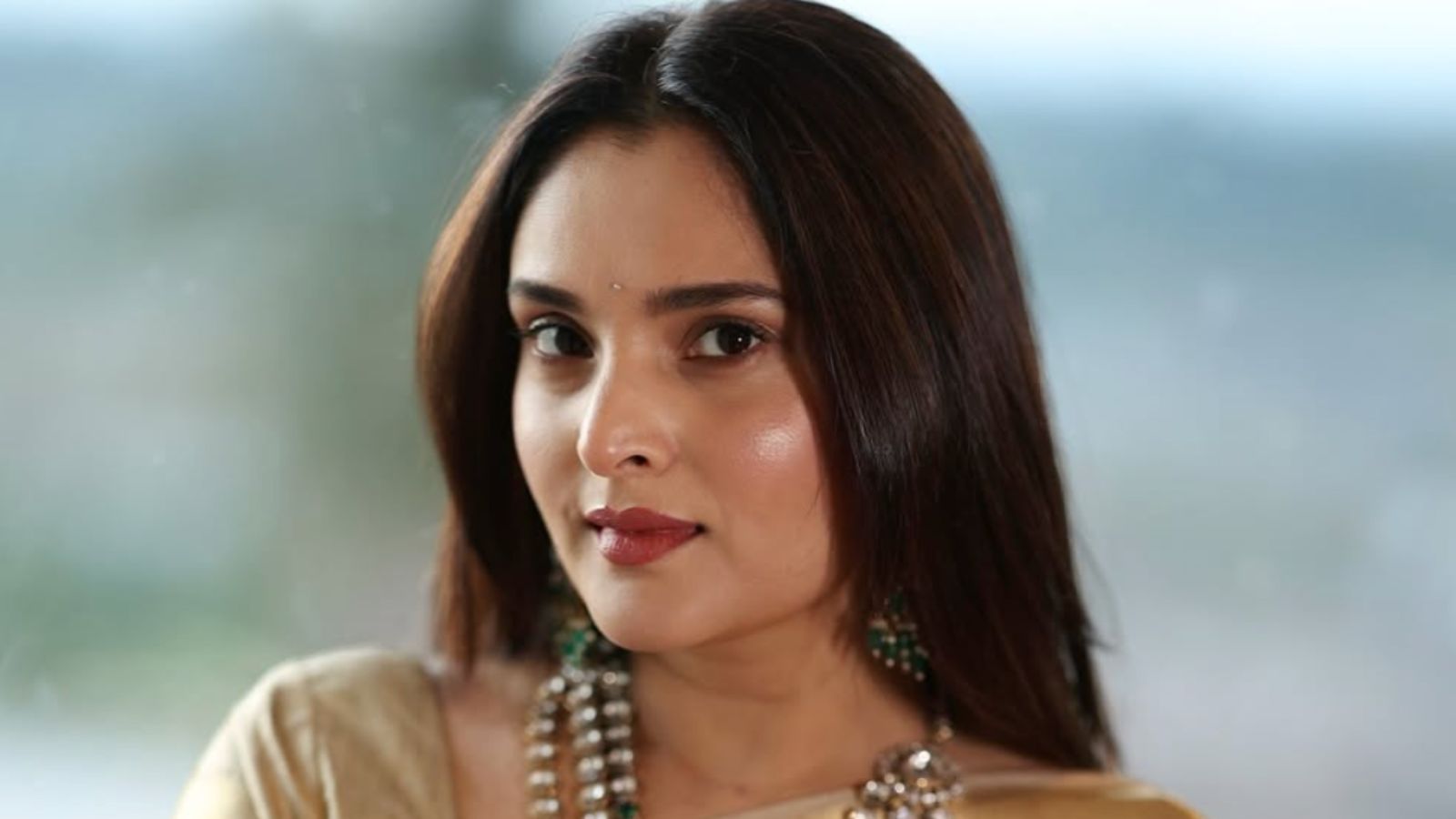
    Police in the Indian city of Bengaluru have opened an investigation into coordinated online abuse under provisions covering sexual harassment, after a complaint from the actor and former member of parliament Ramya.

    A first information report was registered on 28 July 2026 naming 43 social media accounts. The complaint alleges the accounts are operated by supporters of another actor, Darshan Thoogudeepa, who is not accused of any wrongdoing. The case has been transferred to the Central Crime Branch of the city police for a detailed investigation.

    Online abuse in India is more commonly pursued under general provisions of the Information Technology Act, which address individual acts by individual users. Invoking sexual harassment provisions against a group of accounts treats the campaign itself as the offence.

    Whether that holds is the question the case will settle. Coordinated abuse is difficult to prosecute because responsibility is distributed: each account may post material that would not, alone, meet a threshold, while the aggregate effect on the person targeted is severe. Few jurisdictions have found a way to reach it.

    Technology-facilitated gender-based violence — abuse committed, assisted or amplified by digital tools and directed at people because of their gender — has been documented as disproportionately affecting women in public life in India, though the country publishes no regular data on prosecutions.

    No individual has been charged. Darshan Thoogudeepa is not accused of any wrongdoing in the complaint, which concerns accounts said to be operated by his supporters.