
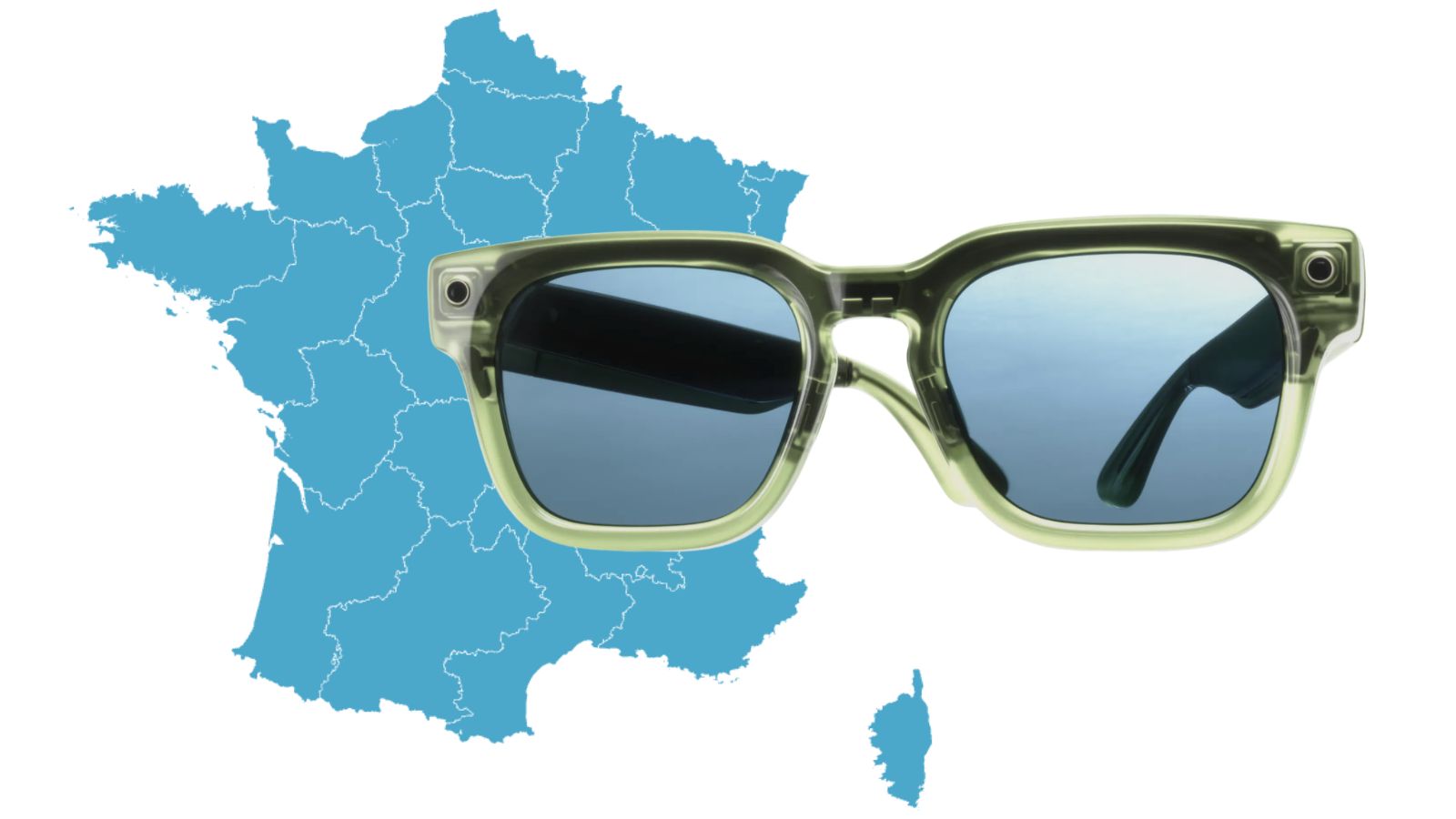
A French helpline says it has received around twenty reports since January from women who were filmed without their knowledge by people wearing camera glasses, with the footage then published on social media.
The Association e-Enfance, which runs the national 3018 line for victims of online harassment and digital violence, said that the reports followed a consistent pattern. A content creator approaches a girl or a young woman in a public place — a street, a station, a park, a shopping centre — and films her without telling her. He then tries to provoke a reaction or deliberately puts her in an awkward position. The sequence is posted as a prank or a vox-pop.
Publication is often the start of a second harm, the association said. Mockery, insults, hateful or misogynistic remarks and threats accumulate in the comments and in private messages.
In one case it handled, a girl contacted the 3018 after being filmed at the Fête de la Musique in Paris by a man. He asked her questions that made her uncomfortable and followed her down the street until she answered. The video went viral. She then received hateful comments and death threats.
Videos removed, then reposted
The association is France’s first designated trusted flagger under the European Union’s Digital Services Act, a status granted by the media regulator Arcom that gives its reports priority handling by platforms.
Several of the accounts involved belong to creators whose output consists of this kind of content, it said. When victims ask for videos to be taken down, the creators refuse. TikTok removed several of the videos the 3018 flagged, but some were put back online afterwards and the accounts remain active and are still posting.
What Meta has changed
Meta has tightened its safeguards. The glasses carry a light that shows when the camera is running, and the company has rolled out updates that disable the photo and video functions if that light is covered or damaged.
Unbowed contacted Meta for comment.
Meta told Semafor on 1 September that it had disabled the cameras on thousands of pairs after detecting tampering, and estimated that fewer than one in a thousand of the glasses it has sold had been interfered with. Alex Himel, its vice president of wearables, described the problem as “a little bit of a cat and mouse game” and said the company would “keep monitoring and evolving the measures that we have”.
For the e-Enfance association, that does not solve the problem. Seeing a light does not mean consenting to having your image published, it said — and that assumes the person sees it, understands what it means and has any opportunity to react.
“Victims cannot become the full-scale test of products whose abusive uses should have been better anticipated,” said Véronique Béchu, who directs the association’s observatory. “The rules governing these devices need to be revisited at the design stage. And when creators make a business out of humiliating strangers, platforms must apply zero tolerance and suspend repeat accounts.”
The regulator said much the same in May
France’s data protection authority, the CNIL, warned in May that the technical means of telling people they are being recorded — an indicator light, for example — have only limited effect, and that some uses have none at all.
In a survey it commissioned in January of 2,128 people, 67 per cent said connected glasses posed a risk to privacy. The CNIL said the devices threatened a shift from surveillance that is fixed, signposted and regulated to surveillance that is mobile, almost invisible and everywhere, and has referred the question to the European Data Protection Board.