
India’s Supreme Court told three government ministries to look at a proposal for an emergency mechanism to take down non-consensual intimate images, deepfakes and online threats rather than taking on the petition itself.
The petition was brought by Narender Kumar Goswami. He sought what he called a constitutionally compliant, time-bound, URL-specific and judicially supervised emergency mechanism to address five categories of harm: threats of physical or sexual violence or death; doxxing that creates a reasonable fear of harm; disclosure of the details, photographs or school information of children; non-consensual intimate, morphed, synthetic or AI-generated material; and deepfake impersonation causing immediate grave harm to safety, dignity, livelihood or reputation.
His case rested on what he called the “speed gap” between digital harm and legal remedy. “A specific threat of rape or murder may silence a woman from public discourse before the police or courts act,” the petition said. A deepfake can destroy identity, livelihood, family life and reputation “before forensic truth can catch up”. Therefore, it argued, “delay in remedy may itself become denial of remedy”.
What the court did
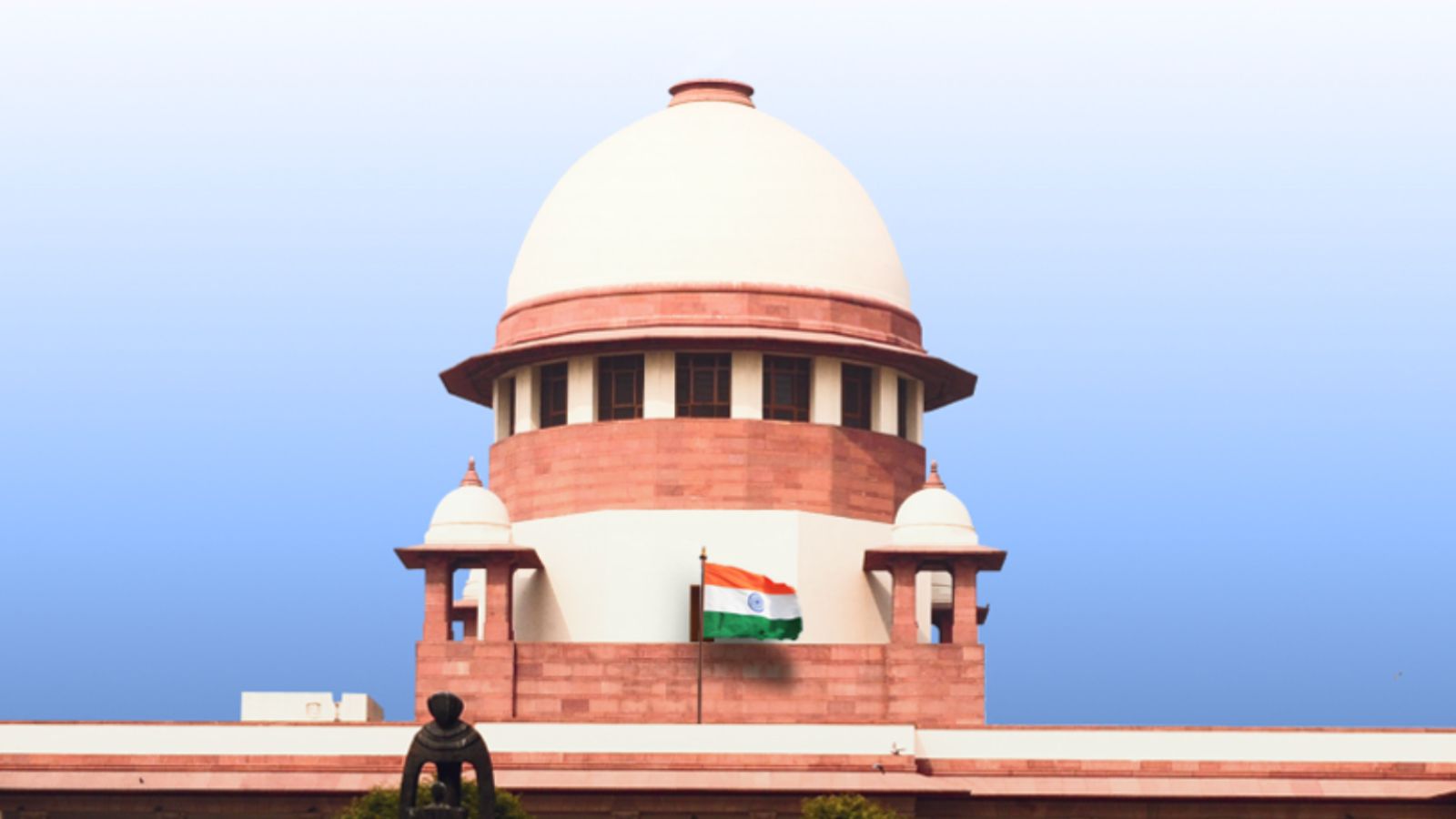
A bench of Chief Justice Surya Kant and Justices Joymalya Bagchi and V. Mohana accepted the issues were comprehensively raised, and disposed of the case.
“Since remedial actions are required to be taken by the addressee authorities, we dispose of this petition at this stage,” the order reads, directing the ministries of electronics and information technology, home affairs, and law and justice, “and all other stakeholders”, to examine a representation Goswami had sent them on 22 June and take such measures “as may be required in accordance with law”.
The chief justice put it to him directly: “How to detect them, what preventive measures — these are to be taken by domain experts. You have already raised this issue through a representation, and therefore, we direct the authorities first of all to examine that.”
Goswami had told the court he received no effective decision on that representation.
The gap he was pointing at
India is not short of takedown deadlines. Amendments to the information technology intermediary rules, notified on 10 February and in force from 20 February, require platforms to remove unlawful synthetically generated content within three hours of a valid government or court order, down from 36. For sensitive categories, including non-consensual sexual imagery and impersonation, the window is two hours. Failure costs a platform its safe harbour protection under section 79 of the Information Technology Act.
On paper those are among the fastest statutory deadlines anywhere. But they run from an order a woman must first obtain.
Goswami’s petition accepted that the existing rules recognise urgency, and argued they provide no uniform, judicially supervised, time-bound route. Criminal law is no answer either, it said: the Bharatiya Nyaya Sanhita of 2023 covers criminal intimidation, stalking, defamation and impersonation, but prosecution “punishes the offender; it does not by itself guarantee immediate, URL-specific disabling of harmful content or preservation of digital evidence before viral dissemination”.
He proposed safeguards against overreach — that any disabling order be reasoned, confined to the content complained of, limited to India, subject to evidence preservation, notified to the uploader where identifiable, and followed by a hearing within a short period. He also asked the court to have the government convene an expert committee including the National Commission for Women, the child rights commission, CERT-In, and free speech, privacy and women’s safety specialists.
Two weeks earlier
On 28 July the same three judges urged the government to make “digital arrest” — a fraud in which victims are convinced they are under remote police detention — a standalone offence, and pressed for a law on deepfakes. Solicitor General Tushar Mehta told them a draft bill was coming that would cover both. It is expected in the current session.
Across both hearings the pattern is the same: the court naming the gap, and the government saying it will fill it.