
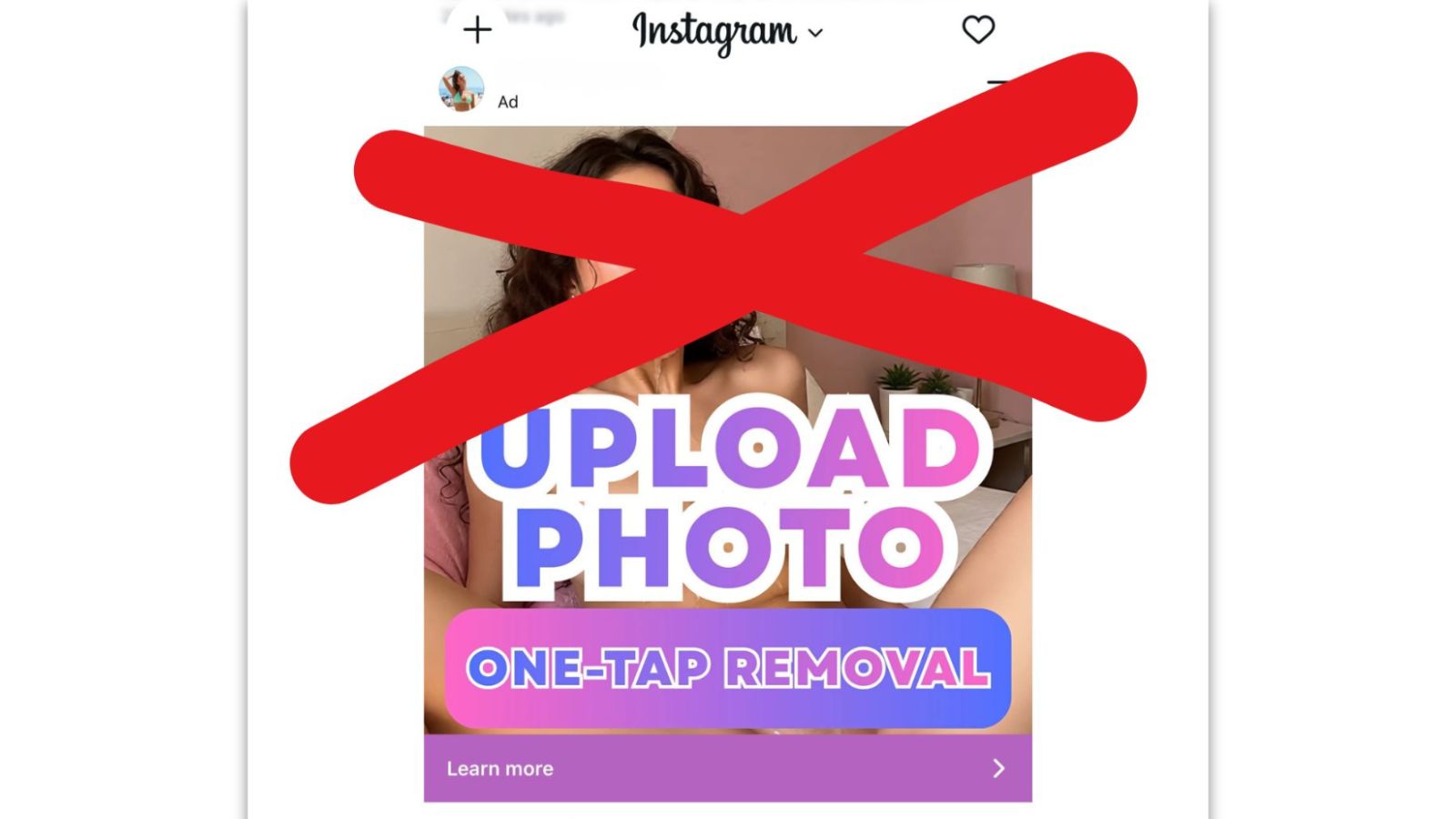
Advertisements for artificial intelligence tools that generate sexual images of real people without their consent are still running on Instagram, the campaign group Stop Online Harm said on Wednesday.
The organisation said its team had investigated and found ads promoting tools that digitally remove clothing and produce sexually explicit images. The adverts it found offered to “undress” the subjects of photographs and showed women in sexually explicit positions, it said.
Meta, which owns Instagram and Facebook, prohibits exactly this. Its Adult Sexual Exploitation community standard bars “promoting, threatening to share, or offering to make NCII or kissing imagery through applications or services (including AI), or instructions, even if there is no commercial or non-commercial imagery shared in the content (sometimes referred to as ‘nudify’ apps or ‘AI kissing’ apps)”. NCII stands for non-consensual intimate imagery.
Stop Online Harm published its finding on LinkedIn.
What has been documented
A detailed account of nudify advertising on Meta’s platforms was published on 26 July by the Tech Transparency Project, a Washington-based non-profit that monitors large technology companies.
Using Meta’s Ad Library — the disclosure database the company is required to maintain in the European Union under the Digital Services Act — the group traced a network of adverts to GatherOne, also trading as Hongkong Gather Wisdom, one of roughly a dozen Chinese agencies Meta authorises to place adverts on behalf of Chinese clients. Because China blocks both platforms, Chinese advertisers wanting to reach audiences abroad must in principle go through such an intermediary.
The group identified 210 Facebook pages naming GatherOne in their advert disclosures, which between them ran about 30,800 adverts for face-swap and other AI apps. Of those pages, 43 ran more than 7,600 adverts for apps the researchers verified could nudify women. Multiple user reviews of one app flagged what appeared to be child sexual abuse material.
Meta removed many of the adverts and disabled accounts during the investigation, the group said, but at least two dozen linked pages carried on advertising after having adverts taken down.
Meta did not answer the Tech Transparency Project’s questions. In a statement to Bloomberg News, which reported the research, it said it takes “aggressive steps” against nudify apps and that advertisers who break its rules risk having adverts cancelled, being fined and having their accounts terminated. GatherOne told the researchers after publication that it had suspended new advertising accounts for AI nudify, face-swap and “girlfriend” services.
Meta has not commented publicly on Stop Online Harm’s finding.
Not the first time
Meta sued Joy Timeline HK, the Hong Kong company behind the CrushAI nudify app, in June 2025, saying it had repeatedly evaded enforcement. Researchers had linked more than 87,000 adverts across over 135 Facebook pages to that app. A CBS News investigation separately found hundreds of nudify adverts running on Facebook and Instagram.
Creating these images is now unlawful in a growing number of jurisdictions. Minnesota’s ban on tools that generate fake nude images took effect on 1 August after a federal judge refused xAI’s request to pause it.
A poll published on 4 August by Women Who Tech and Rad Campaign, two organisations that campaign on the issue, found 67 per cent of American adults registered some or high concern about AI being used to create sexual imagery of women, and 71 per cent about deepfakes that sexualise children.